


Gum disease is one of the most common causes of tooth loss among adults. One of the major risks associated with gum disease is that most people do not know they have it until it is too late.
What Causes Gum Disease?
 Gum disease, also known as periodontal disease, occurs due to bacterial growths in a person’s mouth. If not properly treated, it can lead to tooth loss. Gum inflammation and plaque buildup which occur due to gingivitis and are what commonly lead to gum disease. This results in bleeding, inflammation, and irritation.
Gum disease infects the tissues surrounding a person’s teeth and is caused by the plaque that forms on teeth. Plaque is the film that builds up on a person’s teeth. It contains millions of bacteria. Without regular brushing and flossing, this bacteria can cause tooth decay as well as gum disease.
What Are the Warning Signs of Gum Disease?
There are many different warning signs of gum disease. These warning signs include:
- Swollen or red gums
- Bleeding when brushing or flossing
- Receding gums
- Mouth sores
- Bad breath
- Loose teeth
- Pus in between teeth and gums
What Are the Stages of Gum Disease?
The earliest stage of gum disease is gingivitis, which is characterized by red, swollen and inflamed gums. If spotted early on, gingivitis can be reversed. Patients who experience the early stages of gingivitis can visit a dentist for a professional cleaning to remove the plaque buildup causing the gingivitis.
If left untreated, gingivitis can lead to periodontitis. This serious gum infection damages the inner layers of a person’s gums and bone. When this occurs, a person’s gums and bones begin to recede away from the teeth, creating small spaces in between the teeth. These small spaces can become infected with bacteria as plaque and food spread below the gums. Periodontitis can be treated with improved oral hygiene as well as dental treatment.
The final stage of gum disease is advanced periodontitis. During the final stage, the fibers and bones which support a person’s teeth begin to become destroyed. This can lead to loose teeth and can possibly even affect a person’s bite. Without aggressive treatment, a patient’s teeth may have to be removed. Advanced periodontitis is the most destructive stage of gum disease.
The Importance of a Good Oral Hygiene Routine
It is possible to develop gum disease without displaying any warning signs. This is why it is important to visit your dentist at least every six months to examine your teeth. This way, if you are displaying the beginning stages of gum disease, your dentist can help treat it while it’s still reversible. It is absolutely crucial to also have a good at-home oral hygiene routine which can prevent plaque from building and prevent gingivitis from developing into gum disease. This includes brushing twice daily, flossing at least once a day, and eliminating the overconsumption of sugar-laden foods or drinks.
 The fact is, a toothbrush simply can’t reach all the tight spots in between our teeth to remove plaque buildup and leftover food. This is why it is essential for people to get to those hard-to-reach areas using dental floss.
 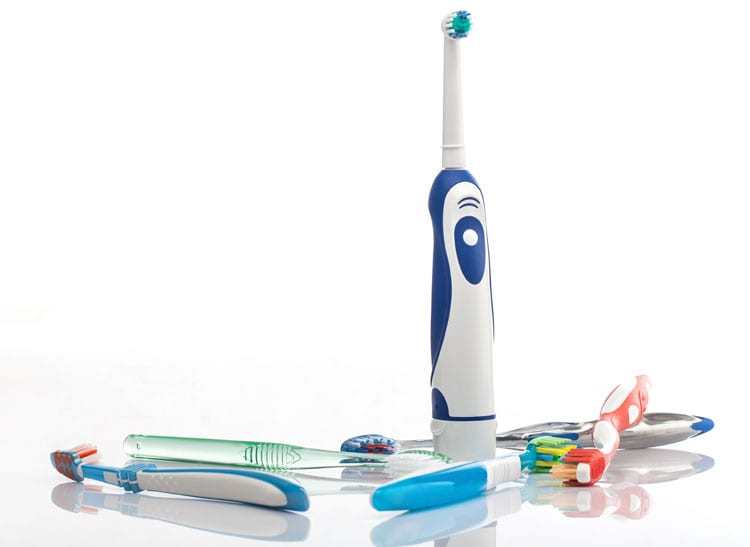 The electric toothbrush has oscillating/rotating/pulsating power and exceptional plaque removal. This superior toothbrush also comes in four different cleaning modes: deep cleaning, whitening, sensitivity, and tongue cleaning. The electric toothbrush also has pressure sensors which notify users if they are using too much pressure on their teeth while brushing. It even has a two-minute timer with a unique 30-second alert to remind you to switch quadrants. Some electric toothbrush models even have built-in Bluetooth connectivity, which provides users with real-time feedback on specific brushing habits.